
APPAREL & ETHNIC WEAR
Specification-Led Apparel & Ethnic Garments
SPARPULSE LLP coordinates apparel production from leading garment clusters across Mumbai, Surat, Tirupur, and Jaipur. We manage contract manufacturing for women’s ethnic wear, children’s apparel, and casual cotton wear to overseas buyer tech-packs, sizing charts, and private-label specifications.
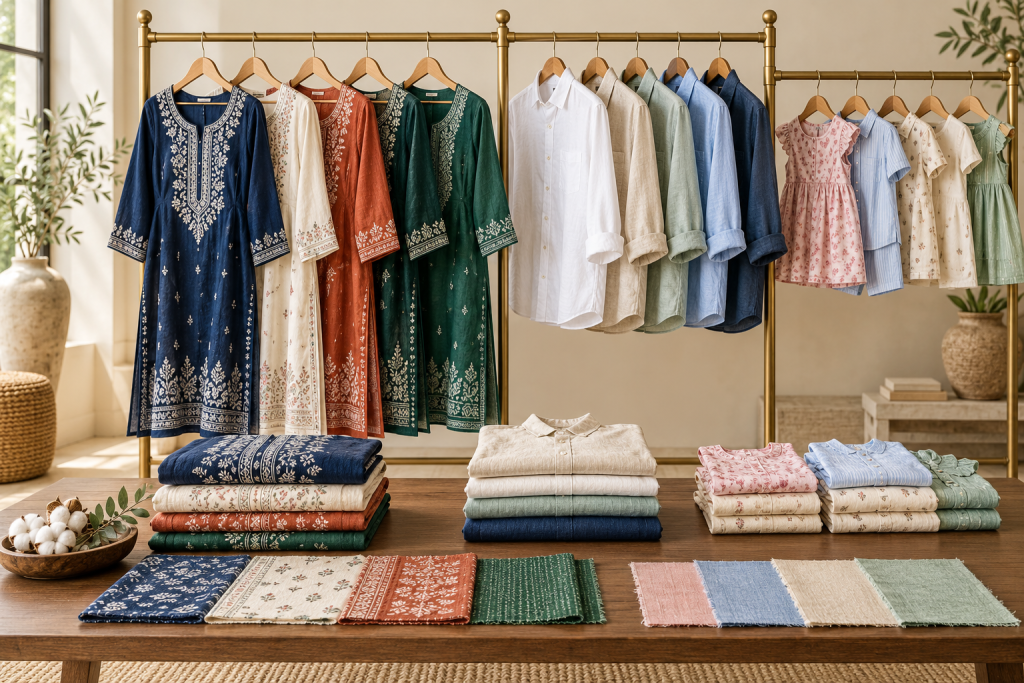
APPAREL LINES SOURCED
Garment Categories & OEM Manufacturing
Executed strictly against approved measurement specifications, grading, and fabric swatches.
Women’s Ethnic Wear & Tunics
Contemporary and traditional Indian women’s ethnic garments for diaspora fashion retailers, department stores, and boutique brands worldwide.
- Product Lines: Kurtis, Anarkalis, Tunics, Palazzo Sets, Kaftans, Dupattas
- Fabrics: Pure Cotton 60s, Viscose Rayon, Chanderi, Modal, Linen
- Embellishments: Machine embroidery, screen printing, foil prints, chikankari motifs
- Size Range: XS to 4XL (graded to European, US, or Gulf size charts)
Children’s Clothing & Playwear
Comfortable cotton garments for infants, toddlers, and young children, complying with strict child safety standards (nickel-free snaps, soft seams).
- Lines: Cotton rompers, sleepsuits, t-shirts, dresses, sets, shorts
- Fabrics: 100% Combed Cotton Single Jersey (160–200 GSM), Interlock, Rib
- Safety Compliance: Lead-free screen inks, anti-choking pull tests on trims
- Age Groups: 0–24 months (Infant), 2–6 years (Toddler), 7–14 years (Kids)
Casual Loungewear & Basics
Knitted and woven casual apparel including unisex cotton t-shirts, polo shirts, pajamas, lounge pants, and organic cotton basics.
- Lines: Crew neck t-shirts, pique polo shirts, cotton sleepwear pants
- Finishes: Bio-wash, silicone wash for ultra-soft hand feel, pre-shrunk
- Customization: Woven brand neck tags, tear-away labels, printed care tags
- Packaging: Individual folding, clear polybag, barcode stickers, solid pack
APPAREL PARAMETERS
Garment Manufacturing Matrix
| Apparel Categories | Women’s ethnic wear (kurtis, anarkalis, tunics), children’s knitted clothing, casual cotton loungewear, uniforms and corporate basics. |
|---|---|
| Fabric Compositions | 100% Indian Combed Cotton, Cotton-Modal, Rayon/Viscose, Linen-Cotton blends, Polyester blends, Chanderi silk blends. |
| Sizes & Grading | Manufactured to buyer tech-pack measurement tables (UK, US, European, or Australian size grade standards). |
| Color Matching | Pantone (TCX/TPX) color matching. Lab dip swatches sent for buyer physical sign-off prior to bulk fabric processing. |
| Trims & Private Labeling | Satin woven neck labels, size pips, wash care instructions in multiple languages, branded hangtags with barcoding, branded polybags. |
| Packaging Protocols | Flat-pack polybagging or hanger-pack; ratio packing into 5-ply export master cartons with moisture barrier liners. |
| MOQ & Production Lead Times | Subject to product specifications and supplier confirmation (Typically 500–1,000 pcs per style/colorway). Production cycles approx 45–60 days after pre-production sample approval. |
PROCUREMENT LIFECYCLE
A Transparent, Specification-Led Sourcing Process
As a dedicated merchant exporter, we manage communication, quality checkpoints, and logistics coordination between international buyers and Indian manufacturing clusters.
1
Requirement Definition
Buyer submits detailed specs: dimensions, GSM/mesh size, material composition, target price, destination port, and packaging criteria.
2
Supplier Sourcing
We shortlist qualified Indian production units based on capacity, technical capabilities, export compliance, and pricing transparency.
3
Quotation & Samples
Detailed commercial proposal with FOB/CIF terms. We coordinate counter-samples, swatches, or lab dips for physical buyer evaluation.
4
Order Coordination
Production schedules, private-label branding, customized master cartons, and milestone reporting to keep overseas buyers fully informed.
5
Inspection & Dispatch
Pre-dispatch inspection coordination (AQL / buyer protocol), export invoice & packing list preparation, and port shipping coordination.
FREQUENTLY ASKED QUESTIONS
International Procurement FAQs
Practical answers regarding MOQs, sampling protocols, inspection, and trade documentation.
What are your typical Minimum Order Quantities (MOQs)?
Because we operate as a merchant exporter across diverse manufacturing clusters, MOQs vary by product line and customization depth. Standard runs often start around 500–1,000 pieces for custom-dyed towels and garments, or 1x20ft FCL container loads for dehydrated foods and bulk home textiles. All MOQs are subject to product specifications and supplier confirmation upon reviewing your inquiry.
How does the sample development and approval process work?
For initial assessment, existing reference samples or fabric swatch cards are dispatched via international courier (DHL/FedEx). For custom counter-samples (custom GSM, pantone dye, custom embroidery, or specific food mesh cut), development takes typically 7–15 working days. Sample development costs and courier freight are discussed and agreed transparently in advance.
Can our company appoint an independent third-party inspection agency?
Yes, absolutely. We welcome and coordinate with third-party accredited inspection agencies such as SGS, Intertek, Bureau Veritas, or your nominated inspection representatives before final carton sealing and container dispatch.
What Incoterms and ports of departure do you support?
Most shipments are quoted on FOB (Free On Board) basis from the Port of Nhava Sheva (JNPT / Mumbai), or CIF (Cost, Insurance & Freight) to your designated discharge port. Air cargo consignments are routed via Mumbai (BOM) or Pune (PNQ) international airports.
Request Garment Sourcing & Sample Development
Share your garment sketches, measurement specs, fabric requirements, and volume expectations. Our team will review production feasibility with partner apparel units.
Request Garments Quote →